
In India, the Aadhaar system provides every resident with a unique 12-digit identification number. This number is linked to basic personal details and biometric information. It serves as a reliable way to prove identity across many services.
Aadhaar matters because it simplifies access to government benefits, banking, and everyday transactions. It helps reduce fraud and ensures aid reaches the right people. For millions of Indians, it has become an essential tool in daily life.
Understanding Aadhaar helps people use it confidently and know its limits. It is a voluntary system, but widely used for practical reasons.
The Aadhaar project began in 2009 when the government created the Unique Identification Authority of India (UIDAI). The goal was to give every resident a single, verifiable identity number. This was meant to improve delivery of public services.
Enrollment started in 2010, and the system grew quickly. By 2016, the Aadhaar Act gave it legal backing. Today, over 1.3 billion people have Aadhaar numbers.
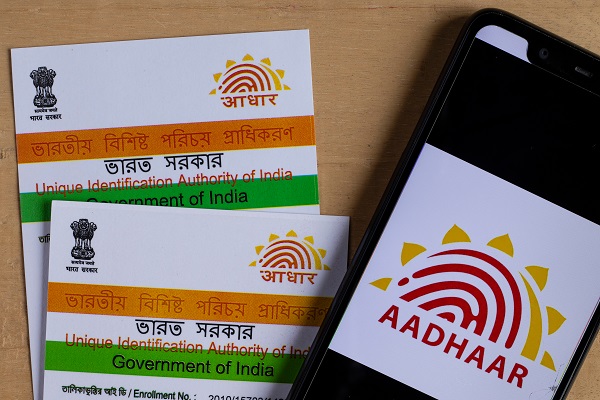
An Aadhaar number is random and contains no personal information in the digits themselves. People often receive a physical document known as the Aadhar card which displays the number, name, photo, date of birth, gender, address, and a QR code. The card itself holds no biometric data.
The real strength of Aadhaar lies in its central database, which stores demographic and biometric details securely. Only authorised entities can access limited information for verification.
Anyone living in India, including children and foreigners with valid visas, can enroll for free. You visit an authorised Aadhaar enrollment centre with supporting documents. There are thousands of centres across the country.
The operator records your details, captures biometrics, and gives you an acknowledgment slip. The Aadhaar number is usually sent by post or can be downloaded online within a few weeks.
Aadhaar uses biometrics to ensure no duplicates exist. During enrollment, ten fingerprints, both iris scans, and a photograph are captured. This makes the identity nearly impossible to fake.
Biometrics are stored encrypted in the central database. When services verify identity, only a yes/no response is returned—no biometric data is shared.
Aadhaar is commonly used for opening bank accounts and completing Know Your Customer (KYC) requirements. Mobile phone companies require it for new connections or re-verification. Many private services also accept it for identity proof.
It is linked to Permanent Account Number (PAN) for income tax filing. People use it for buying property, vehicles, or mutual funds.
The government uses Aadhaar for direct benefit transfers (DBT). Subsidies for cooking gas, food grains, pensions, and scholarships go straight to bank accounts linked to Aadhaar. This reduces leakage and middlemen.
Many welfare schemes require Aadhaar authentication to confirm the beneficiary is alive and present. It is also used for digital signatures and some public distribution systems.
Privacy has been a major concern since the beginning. The Supreme Court of India ruled that Aadhaar must respect privacy rights and limited its mandatory use. Only minimal data can be collected, and sharing is strictly regulated.
The UIDAI responsibilities include safeguarding the central database with advanced encryption and regular security audits. Authentication logs are kept for limited periods and cannot be used for profiling without permission.
If your name, address, phone number, or other details change, you can update them online or at a centre. Some updates are free, while others have small fees. Biometrics can also be updated if needed.
You can download the latest e-Aadhaar anytime from the UIDAI website using your number and OTP. A PVC card can be ordered for a nominal charge.
Aadhaar has become a central part of identity verification in India. It represents a unique, portable proof of who you are.
The system helps streamline services while aiming to protect personal information. Millions rely on it daily for both government and private needs.
Knowing how Aadhaar works allows people to use it effectively and understand its role in modern India.